
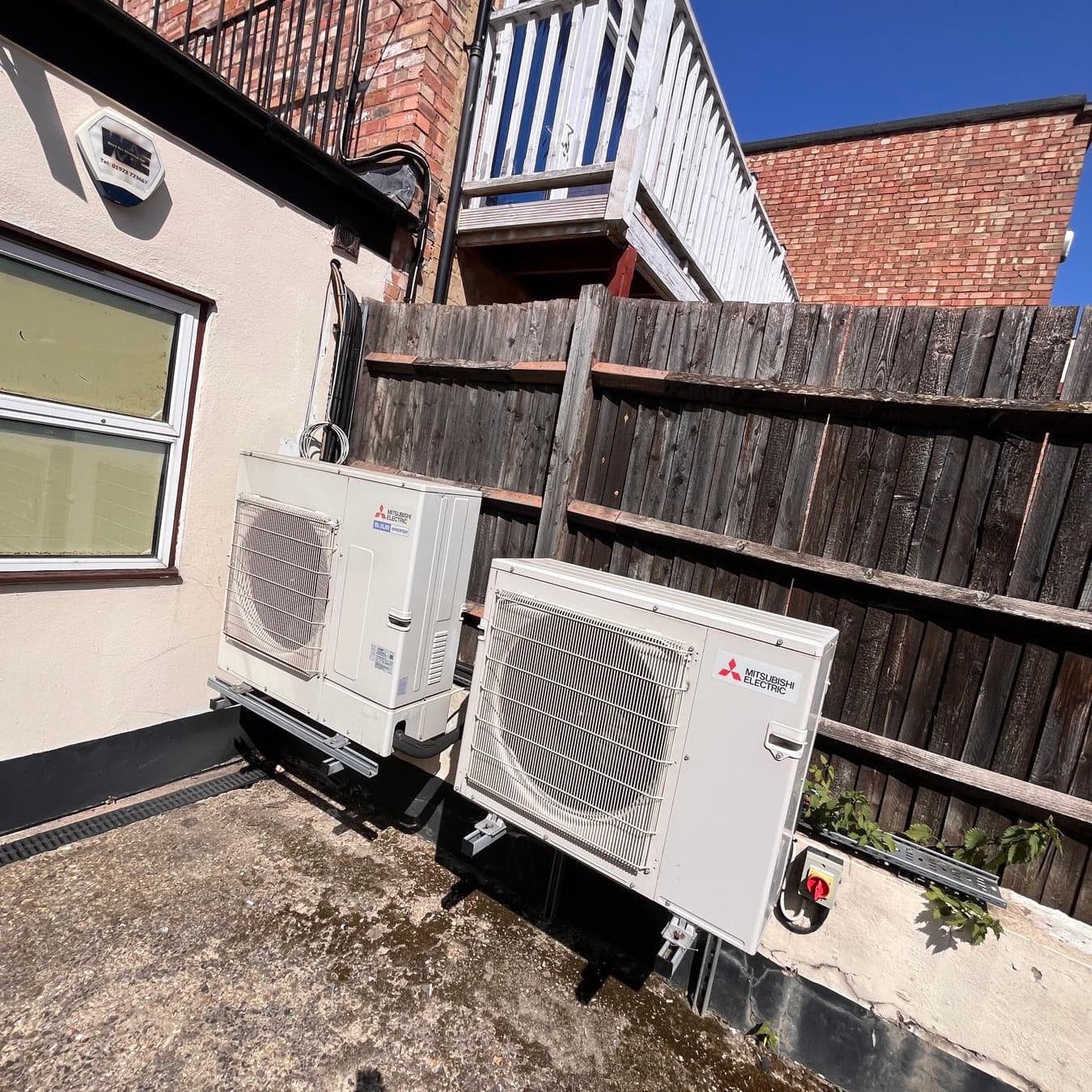
Of all the commercial energy compliance regimes, TM44 is the one most landlords and facilities managers forget about until Trading Standards turns up. It's a five-yearly cycle, the penalty is small enough that nobody panics, and the trigger thresholds aren't widely understood. That combination makes TM44 one of the most common compliance gaps we find on London commercial portfolios.
Here's what's actually required, when, and what it costs.
When TM44 applies: the 12 kW threshold
Under the Energy Performance of Buildings (England and Wales) Regulations 2012 (SI 2012/3118), any air-conditioning system with an effective rated cooling output above 12 kW must be inspected by an accredited assessor at least every five years. The inspection follows the methodology in CIBSE Technical Memorandum 44.
The 12 kW threshold is the combined output of all coupled units serving a single building under one operator's control, not per individual unit. A small office with six 3 kW wall splits totals 18 kW and needs a TM44; a single 10 kW VRF in a larger building does not. Refrigeration plant and process cooling are excluded.
Frequency: every five years, no exceptions
The first TM44 inspection must take place within five years of the system being commissioned. Each subsequent inspection must follow within five years of the previous one. There is no annual requirement, no light-touch interim check, and no equivalent to the EPC's 10-year validity for buildings without ongoing system change.
When systems are extended, replaced or substantially altered, a fresh TM44 is sensible regardless of the calendar position in the five-year cycle, because the existing report no longer reflects the installation it certifies.
What the inspection actually covers
A TM44 inspection records every indoor and outdoor unit on the building, the cooling load it serves, the controls, the maintenance status, the sizing relative to the load, and the operating regime. The assessor produces a report listing all this and gives prioritised recommendations to reduce energy use, with indicative paybacks where appropriate.
The report is lodged on the Landmark non-domestic register and a copy must be kept on site, available for inspection. The recommendations themselves are advisory; the inspection is not.
Typical cost in London commercial property
Pricing follows the system size. Small systems with a combined effective rated output of 12 to 49 kW are £495; medium systems of 50 to 149 kW are £695; large systems of 150 kW and above are £995. Add-ons apply where the plant is unusual: chillers run at +£300 per chiller, large air-handling units at +£150. Multi-system industrial sites and sites with process cooling alongside comfort cooling are priced per building.
We always quote per building. TM44 reports are lodged per address on Landmark, so a portfolio of buildings under one ownership still receives separate reports, separate lodgement numbers, and separate fees.
The penalty: small, but enforced
Failing to have a valid TM44 inspection report on a qualifying system carries a fixed penalty of £300 per building under the EPB Regulations. A separate £200 penalty applies for failing to hand over the report to a Trading Standards officer within seven days of a request. Both penalties apply per building, and can be re-issued for continuing non-compliance.
£300 sounds modest until you remember it scales with portfolio size. A managing agent with 40 in-scope buildings across London who has missed the cycle is potentially looking at £20,000 in penalties before legal costs and the actual cost of catching up on the inspections.
Who's responsible: landlord or tenant
The legal duty falls on whoever controls the operation of the system. For a single-let building this is usually the tenant; for multi-let buildings with landlord-supplied centralised cooling it is the landlord. The lease should specify the position contractually, but the statutory duty under the Regulations sits with the operator regardless of the contract.
In practice, on multi-let London commercial property the landlord almost always handles TM44 because the central plant rooms are landlord territory and tenants don't have access. Flag any single-let property where the lease leaves this ambiguous.
Need an EPC or MEES audit on your London commercial stock?
Accredited assessors, lodged on Landmark in 24-48 hours. 1,000+ certificates delivered across Greater London.